Related Articles
- Unconventional Wisdom: Exploring Surprising Influencers Shaping Consumer Trends in 2023's Niche Ecosystems
- Beneath the Surface: Discovering the Unlikely Impact of Micro-Communities on 2023's Consumer Landscape
- Unexpected Catalysts: Exploring the Surprising Forces Influencing Subculture Trends in 2023
- Unmasking Influences: The Unlikely Narratives Behind Today's Obscure Market Trends and Consumer Choices
- The Paradox of Generosity: How Giving Can Lead to Unexpected Financial Gains in Competitive Markets
- The Unexpected Cost of Silence: How Communication Gaps Drain Resources in Organizations
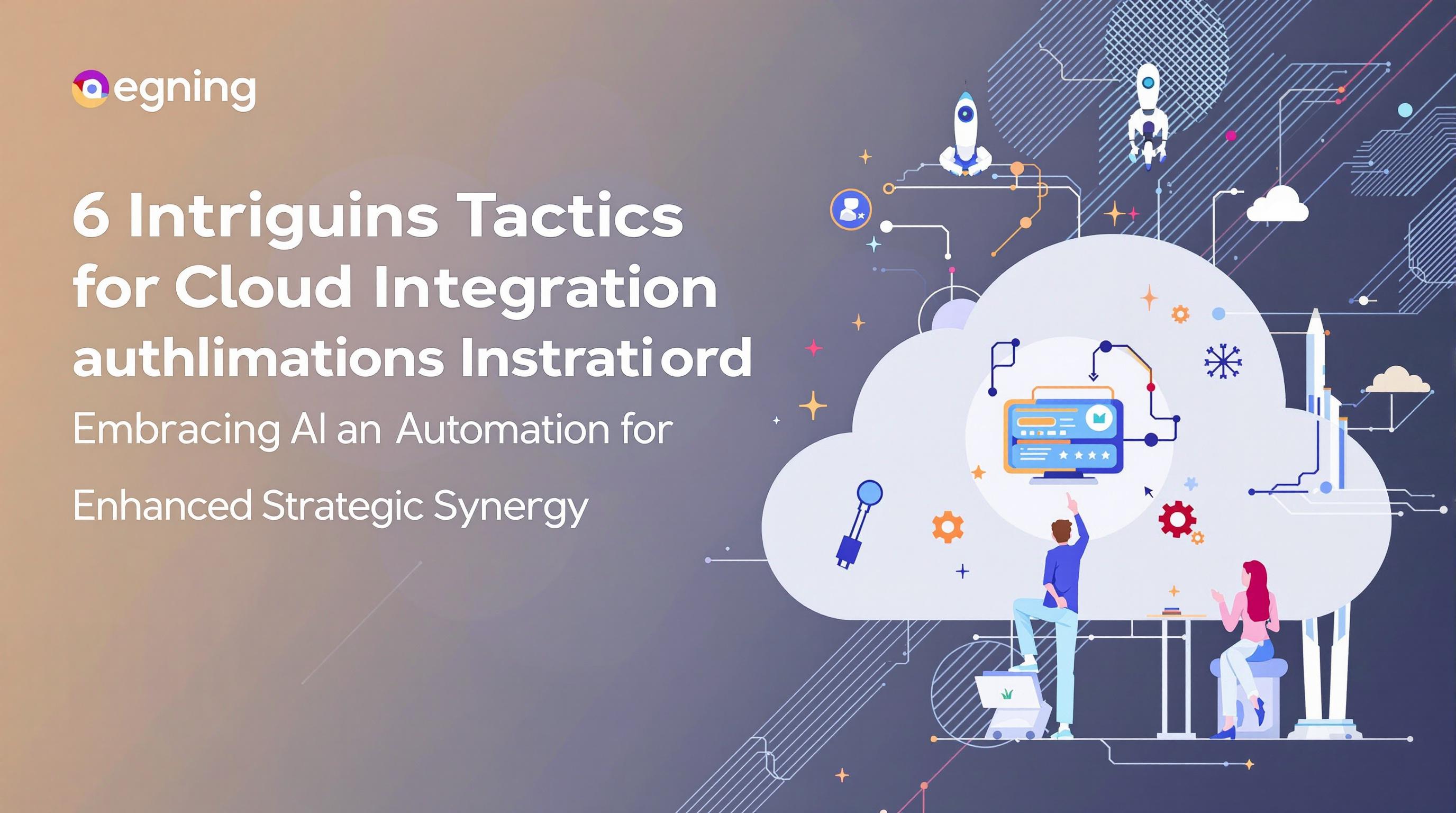
6 Intriguing Tactics for Cloud Integration: Embracing AI and Automation for Enhanced Strategic Synergy
6 Intriguing Tactics for Cloud Integration: Embracing AI and Automation for Enhanced Strategic Synergy
6 Intriguing Tactics for Cloud Integration: Embracing AI and Automation for Enhanced Strategic Synergy
Tactic 1: Intelligent Data Migration
As organizations increasingly migrate to the cloud, intelligent data migration has emerged as a critical strategy. Utilizing AI-driven tools, businesses can automate the process of transferring data, minimizing downtime and risks associated with data loss. This technology assesses the current data landscape, provides insights, and formulates the best migration path, ensuring strategic alignment with business objectives.
Automation in data migration also encompasses the ability to sync data across on-premises and cloud platforms seamlessly. By combining cloud services and local infrastructures, organizations can maintain continuity while enhancing data accessibility. The integration of AI into this process allows for real-time performance monitoring, enabling companies to pivot quickly should any anomalies arise.
Moreover, intelligent data migration supports better compliance and governance. As regulations around data handling tighten, automation aids in creating detailed logs and managing compliance issues efficiently. By leveraging AI, companies can ensure they meet regulatory standards without sacrificing operational efficiency.
Tactic 2: AI-Driven Analytics
The use of AI-driven analytics is revolutionizing how organizations leverage data from their cloud environments. By employing sophisticated algorithms and machine learning, businesses can uncover insights that were previously hidden within vast datasets. This capability not only enhances decision-making but also allows companies to anticipate market trends and customer needs.
Cloud platforms equipped with AI analytics tools enable organizations to centralize their data. This centralization fosters an environment where real-time insights fuel strategic initiatives. With predictive analytics, businesses can create targeted marketing strategies and enhance operational efficiency, leading to improved customer experiences.
Furthermore, AI-driven analytics can uncover inefficiencies and operational bottlenecks. By analyzing workflows and processes through automated tools, organizations can streamline operations, reduce costs, and drive higher performance. In a competitive landscape, this capability can be a key differentiator.
Tactic 3: Enhanced Security Protocols
Cloud integration comes with its share of security challenges, and without robust security protocols, companies can place their data and operations at risk. Employing AI and automation can significantly enhance the security posture of cloud environments. Automated security systems can monitor and respond to threats in real time, often faster and more accurately than human teams.
AI-driven security solutions utilize machine learning models to identify unusual patterns and potential threats. By evaluating user behaviors and flagging anomalies, these systems can thwart cyberattacks before they compromise sensitive information. Thus, organizations can confidently embrace cloud-based solutions without compromising security.
Moreover, combining AI with automated compliance checks allows companies to ensure that they meet regulatory standards continuously. These practices not only safeguard the organization against breaches but also build trust with customers and stakeholders, showcasing a commitment to data protection.
Tactic 4: Workflow Automation
Workflow automation in cloud integration is transforming how businesses operate. By leveraging AI technologies, organizations can automate repetitive and mundane tasks, allowing employees to focus more on strategic initiatives that drive company growth. This leads to increased productivity and reduced operational costs.
Automated workflows can integrate various functions, such as sales and marketing, ensuring that information flows seamlessly across departments. This integration minimizes communication gaps and enhances collaboration, empowering teams to work toward common goals efficiently. Mandating this synergy can lead to improved project outcomes and satisfaction among employees.
Furthermore, AI-driven workflow automation can adapt in real-time, allowing for agile responses to market changes or internal shifts. This flexibility ensures that businesses remain competitive and responsive as they navigate an increasingly dynamic environment.
Tactic 5: Hybrid Cloud Strategies
In the fast-evolving landscape of data management, hybrid cloud strategies are gaining traction. These approaches combine both public and private clouds, offering the flexibility and scalability that modern enterprises require. By integrating AI into the hybrid cloud model, organizations can optimize resources based on their unique needs.
Hybrid clouds allow businesses to store sensitive data in a private environment while accessing the vast resources of public clouds for less sensitive workloads. AI aids in managing workloads effectively, analyzing which tasks are best suited for each environment, and loading balancing resources accordingly. This strategic synergy enhances operational efficiency.
Additionally, hybrid cloud strategies facilitate innovation by allowing organizations to develop and test new applications in the cloud. The flexibility of this model encourages experimentation while keeping sensitive data secure. As digital transformation accelerates, hybrid clouds integrated with AI will play a crucial role in driving business growth.
Tactic 6: Collaborative Cloud Platforms
Collaborative cloud platforms are shifting the paradigm of team productivity and efficiency. By integrating AI and automation into collaboration tools, organizations can foster an interactive environment that boosts teamwork and creativity. Features like real-time communication, file sharing, and project management become enhanced when AI analyzes user interactions and optimizes processes.
Automation in these platforms streamlines repetitive tasks, allowing team members to focus solely on collaboration and innovation. With AI providing insights into team dynamics, organizations can adapt their strategies and improve communication, enhancing overall performance. Moreover, utilizing AI-powered analytics enables continuous learning and improvement of team processes.
The collaboration facilitated by cloud platforms also transcends geographical barriers, allowing teams to come together regardless of their location. This inclusivity results in a diverse range of perspectives and skills, further enriching the organizational culture while driving innovation.
Read More